
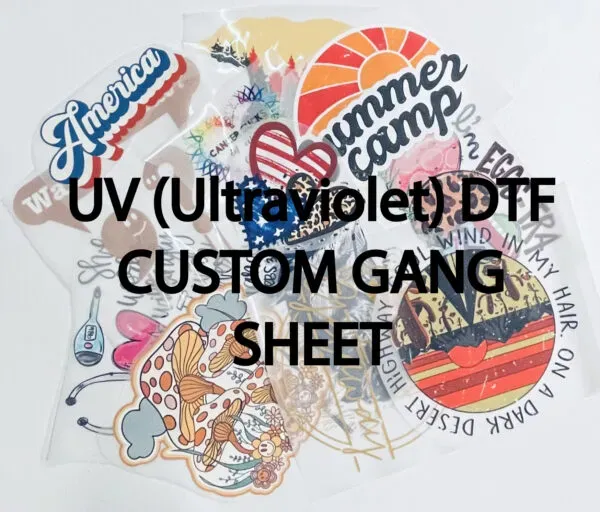
In the realm of fabric printing technology, **UV DTF Gangheet** is swiftly establishing itself as a revolutionary advancement, combining the brilliance of ultraviolet printing with the efficiency of direct-to-film methods. This innovative approach not only facilitates vibrant and durable prints but also addresses the growing consumer demand for sustainable fabric printing solutions. With its capacity to produce custom apparel of the highest quality, **UV DTF Gangheet** is redefining the textile printing landscape. Its rapid curing process, made possible by UV technology, ensures seamless application across a variety of surfaces while minimizing environmental impact. As the industry evolves, the significance of this cutting-edge technique in driving textile printing innovations cannot be overstated.
Exploring the latest breakthroughs in fabric decoration, we encounter **UV DTF Gangheet**, a remarkable process merging ultraviolet curing with direct transfer printing. This modern printing technique allows for exceptional designs on various textiles, paving the way for new lines of custom apparel and personalized clothing. Beyond just visual appeal, it emphasizes the importance of sustainable practices within the fabric industry. By adopting energy-efficient processes and eco-friendly inks, **UV DTF Gangheet** enhances the appeal of textile printing without compromising environmental integrity. As such innovations continue to emerge, they promise to shape the future of fabric printing applications and the way we perceive custom textile products.
Understanding the Mechanics of UV DTF Gangheet
UV DTF Gangheet technology represents a sophisticated intersection of ultraviolet (UV) printing and direct-to-film (DTF) printing techniques. This advanced method operates by first printing images onto a special film using UV inks, which are cured instantly with ultraviolet light. The UV-cured designs are then transferred onto various fabric substrates, creating vibrant and durable prints. This process not only enhances the color vibrancy but also promotes strong adhesion to the fabric, ensuring longevity even after multiple wash cycles.
The mechanical components involved in UV DTF Gangheet include specialized printers equipped with UV light systems, which are key to the technology’s efficacy. These printers have been engineered to handle a range of materials including cotton, polyester blends, and more, increasing versatility in applications. By utilizing these innovative mechanics, businesses can now deliver intricate designs with incredible detail, catering to a diverse consumer market that increasingly values customization in apparel and other textile products.
The Rise of Sustainable Fabric Printing with UV DTF
As the fabric printing industry evolves, sustainability has become a primary concern among consumers and businesses alike. The introduction of UV DTF Gangheet technology signifies a shift towards greener printing practices. Unlike traditional printing methods that utilize solvent inks known for their harmful VOC emissions, UV inks used in UV DTF applications are designed to be eco-friendly. They effectively reduce environmental impact while maintaining high-quality output, which resonates well with environmentally conscious consumers.
Additionally, the energy-efficient nature of UV curing reduces waste and improves manufacturing processes in fabric printing. Companies adopting UV DTF techniques can boast both lower operational costs and a reduced carbon footprint, making them more attractive in the competitive market. This focus on sustainability not only fulfills consumer expectations but also aligns with global initiatives aimed at promoting environmentally responsible practices in various industries.
Market Opportunities with UV DTF Gangheet
The demand for customizable products in the fashion industry is rapidly growing, creating significant market opportunities for UV DTF Gangheet technology. By allowing for a high degree of personalization, this printing method enables brands to respond effectively to consumer desires for unique designs. Businesses can create small batches of tailored clothing or accessories, aiming to satisfy niche markets while minimizing excess inventory—a strategy increasingly favored in today’s retail landscape.
Moreover, the flexibility of UV DTF printing technology has empowered a new wave of entrepreneurs in the custom apparel sector. From streetwear to personalized gifts, the applications are limited only by creativity. As brands leverage UV DTF Gangheet capabilities to cater to evolving consumer preferences, there is potential for substantial growth across various sub-sectors within the fabric printing market.
Innovations in Textile Printing Technologies
The UV DTF Gangheet technology exemplifies the forging of innovation in the textile printing landscape. As advancements continue, we witness improvements in ink formulations that emphasize color richness and durability, paving the way for textile printing innovations that push the boundaries of design. Innovative companies are investing in R&D to further refine their printing processes, which may soon incorporate features such as digital ink management and real-time quality control, enhancing overall printing efficacy.
These innovations contribute not only to better print quality but also to faster production times. As the industry adapts to ever-changing consumer demands, businesses equipped with such advanced technology are poised to stand out. Investing in technologies like UV DTF represents a commitment to embracing the future of fabric printing, emphasizing not only creativity and aesthetic appeal but also operational efficiency.
Exploring Versatile Applications of UV DTF Gangheet
One of the most notable advantages of UV DTF Gangheet technology is its remarkable versatility across various substrates. From apparel to home décor, the capability to print on diverse materials opens myriad avenues for businesses. This adaptability allows companies to cater to different market segments, from custom fashion lines to personalized interior textiles, thereby maximizing their reach and impact.
The versatility inherent in UV DTF Gangheet enables creative solutions for a wide range of applications, including promotional items, sportswear, and professional uniforms. As brands seek to differentiate themselves in a crowded marketplace, the ability to produce unique, high-quality prints on a spectrum of fabric types becomes a critical competitive advantage.
The Future of Fabric Printing: AI and UV DTF Integration
Looking ahead, the integration of artificial intelligence (AI) into UV DTF Gangheet technology is expected to revolutionize the fabric printing industry. AI can enhance various aspects of the printing process, from predictive maintenance to optimizing design workflows. By leveraging data analytics, businesses can improve their operational efficiencies and product offerings, addressing consumer needs swiftly and effectively.
Furthermore, AI’s capabilities can streamline the personalization process, enabling businesses to offer tailored products at an unprecedented scale. As consumer demands continue to evolve, the fusion of UV DTF printing with AI-driven insights may well set the standard for excellence within the fabric printing sector, thus ushering in a new era of innovation and creativity.
Frequently Asked Questions
What is **UV DTF Gangheet** and how does it work in fabric printing?
**UV DTF Gangheet** refers to a cutting-edge printing technique that combines ultraviolet printing with direct-to-film methods. This innovative technology allows for high-resolution prints on a variety of fabrics, where UV light instantly cures the inks for vibrant colors and strong adhesion, making it ideal for textile printing innovations.
How does **UV DTF Gangheet** contribute to sustainable fabric printing?
**UV DTF Gangheet** is more environmentally friendly than traditional fabric printing methods because it uses UV inks that emit lower levels of volatile organic compounds (VOCs). This practice supports sustainable fabric printing initiatives, catering to consumer preferences for eco-conscious products.
What are the advantages of using **UV DTF Gangheet** for custom apparel?
The **UV DTF Gangheet** technology offers significant advantages for custom apparel, including the ability to produce intricate designs with vibrant colors and excellent durability. This versatility allows businesses to cater to the growing demand for personalized clothing without compromising on quality.
In which markets is **UV DTF Gangheet** technology gaining popularity?
**UV DTF Gangheet** is rapidly gaining traction in the custom apparel and fashion sectors. Companies are leveraging this innovative technology to create unique products that meet consumer demands for customization and personalized fabric designs.
What recent developments are influencing the future of **UV DTF Gangheet**?
Recent developments in **UV DTF Gangheet** technology include advancements in ink formulations that enhance durability and color vibrancy. Additionally, the integration of artificial intelligence (AI) is expected to optimize design workflows and predictive maintenance, further revolutionizing fabric printing applications.
What types of materials can be printed using **UV DTF Gangheet** technology?
**UV DTF Gangheet** technology is exceptionally versatile, capable of printing on various materials such as cotton, polyester, and blended fabrics. This adaptability allows businesses to expand their product offerings across different markets, including fashion, home décor, and custom merchandise.
| Key Point | Description |
|---|---|
| Definition | UV DTF Gangheet combines ultraviolet printing with direct-to-film techniques for high-quality fabric prints. |
| Technological Advancements | Recent improvements have enhanced speed, resolution, and ink durability, paving the way for intricate designs. |
| Sustainability Focus | The technology uses eco-friendly UV inks, reducing VOC emissions compared to traditional solvents. |
| Market Growth | Increased demand in fashion and custom apparel markets highlights the need for unique, personalized products. |
| Versatility | Applicable to a range of fabrics including cotton and polyester, broadening market opportunities. |
| Future Prospects | Continued advancements, including AI integration, are expected to enhance print quality and efficiency. |
Summary
UV DTF Gangheet stands at the forefront of fabric printing innovation, revolutionizing the production of vibrant and durable textile prints. This technology seamlessly integrates ultraviolet printing with direct-to-film techniques, offering remarkable benefits such as improved speed, efficiency, and sustainability. As the fabric printing sector adapts to the growing demand for personalization and quality, UV DTF Gangheet emerges as a vital player that meets the evolving needs of both businesses and environmentally conscious consumers. With its versatility across various materials and a focus on reducing VOC emissions, it positions itself as a sustainable future for the industry. The ongoing technological advancements promise even greater potential, ensuring that UV DTF Gangheet will continue to shape the textile landscape in exciting ways.