
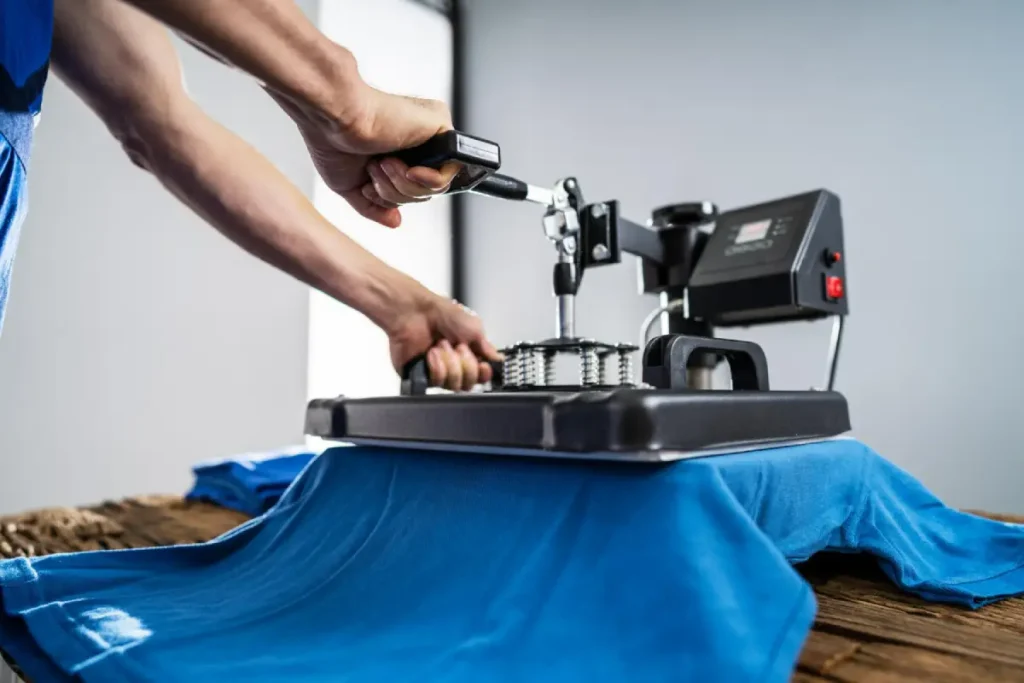
Apparel branding has moved beyond basic customization; it now centers on the mechanical reliability of the final product. Studio owners who continue to approach dtf printing as a simple “print and press” task are destined to remain in the commodity market. To break through into the luxury or high-performance tier, your workshop must function less like a craft space and more like a Material Integration Facility. Quality is not a happy accident; it is the inevitable outcome of a controlled, data-backed production chain.
When you integrate dtf transfers into a garment, you are facilitating a chemical bond between a thermo-plastic polymer and a fiber substrate. If you aren’t managing the molecular interaction of this bond through precise calibration, you are essentially gambling with the product’s lifespan. Harwin advocates for “Evidence-Based Manufacturing”—a strategy where your production parameters are not guesses, but proven metrics tailored to every specific fabric type in your catalog.
Advanced Physics of Fiber Bonding
To reach the upper echelons of apparel quality, you must move beyond standard settings and govern the variables that typically lead to failure:
- Thermal Lag Mitigation: Most heat presses are calibrated for idle state, not load state. When a room-temperature garment touches the platen, the platen’s surface temperature drops significantly. Professional-grade production requires adjusting your dwell time to compensate for this recovery period, ensuring the adhesive hits its true melting point.
- Fiber-Specific Wicking: Not all fabrics are created equal. A heavy-weight cotton fleece requires a different adhesive penetration depth than a lightweight polyester blend. Calibrating your powder particle size to the fabric’s GSM (grams per square meter) is the secret to a “soft-hand” feel that doesn’t sacrifice bond durability.
- Mechanical Stability during Phase-Change: The transition from liquid to solid state is the most vulnerable moment for a print. Any micro-vibration or textile shift during the cooling phase introduces stress fractures. Maintaining a stationary, agitation-free cooling environment for the transfer is essential for preventing long-term peeling.
Optimizing the Supply Chain: Regional Integration
Inventory is the greatest threat to a brand’s solvency. The outdated approach—stockpiling hundreds of shirts—is a massive capital drain. Instead, focus on a Local-Hub Model. By collaborating with professional dtf transfers providers who offer high-output industrial curing, you effectively externalize your equipment overhead while keeping your production “Just-in-Time.”
Searching for dtf transfers near me should be a search for a technical collaborator, not just a vendor. You need a partner who understands the nuance of matte-finish powders, color-profile management, and textile stress-testing. This collaborative relationship allows your brand to remain agile, launching new collections in days rather than months, and focusing your capital where it matters: design, marketing, and customer equity.
The Standard of “Destructive Validation”
If you don’t know how your prints fail, you don’t know how they function. Implement a **Destructive Validation Protocol** as a weekly business ritual. Take a random sample from every production run and subject it to a “Survival Test”: industrial-grade, high-agitation washing, and high-heat drying. If your prints show zero degradation after ten cycles, you possess the empirical evidence to market your brand as “retail-grade.”
When you present this data to potential wholesale accounts, you stop competing on price. You start competing on predictable durability. Your ability to provide a “Wash-Test Report” is the most potent sales tool you can have. It turns a custom print into a verified asset that retailers can stock without fear of returns.
Frequently Asked Questions
Why does inconsistent pressure ruin a high-end graphic?
Pressure is the “driver” of the bond. If the PSI is too low, the adhesive only grips the surface fibers, leading to a “sticker” feel and easy delamination. If the PSI is correct, the adhesive “wicks” into the fiber structure, resulting in a soft, integrated feel that moves with the garment.
How do I identify a transfer provider who understands “Retail-Grade”?
Ask for a “recovery sample.” A professional dtf transfers supplier should be able to provide a sample that can be stretched and released without creating “whitening” or micro-cracks. If the print stays stretched or shows stress, the adhesive chemistry is likely not formulated for real-world retail use.
What is the most effective way to protect heat-sensitive performance gear?
Use a “Thermal Buffer.” Place a high-density silicone mat or a specialized release-sheet between the platen and the garment. This dampens the sudden surge of heat, allowing the adhesive to melt without the fabric surface reaching the “glazing” or scorching temperature.
How do I manage color consistency across different transfer batches?
Color consistency is a function of ICC profiling. Ensure your printing partner uses color-calibrated systems that match your design files. Request a “Color-Match Strip” on the edge of your gang sheets so you can verify color accuracy before starting the full production run.
Building a successful, high-quality apparel brand is a journey of continuous technical refinement. By mastering the potential of dtf, you position your brand to compete at the highest level of the custom merchandise market. Harwin is committed to providing the industry insights you need to turn your production floor into a professional, profitable enterprise. Start optimizing your workflow today—your commitment to quality is the most valuable investment you can make for your brand’s future.